Space
Einleitung
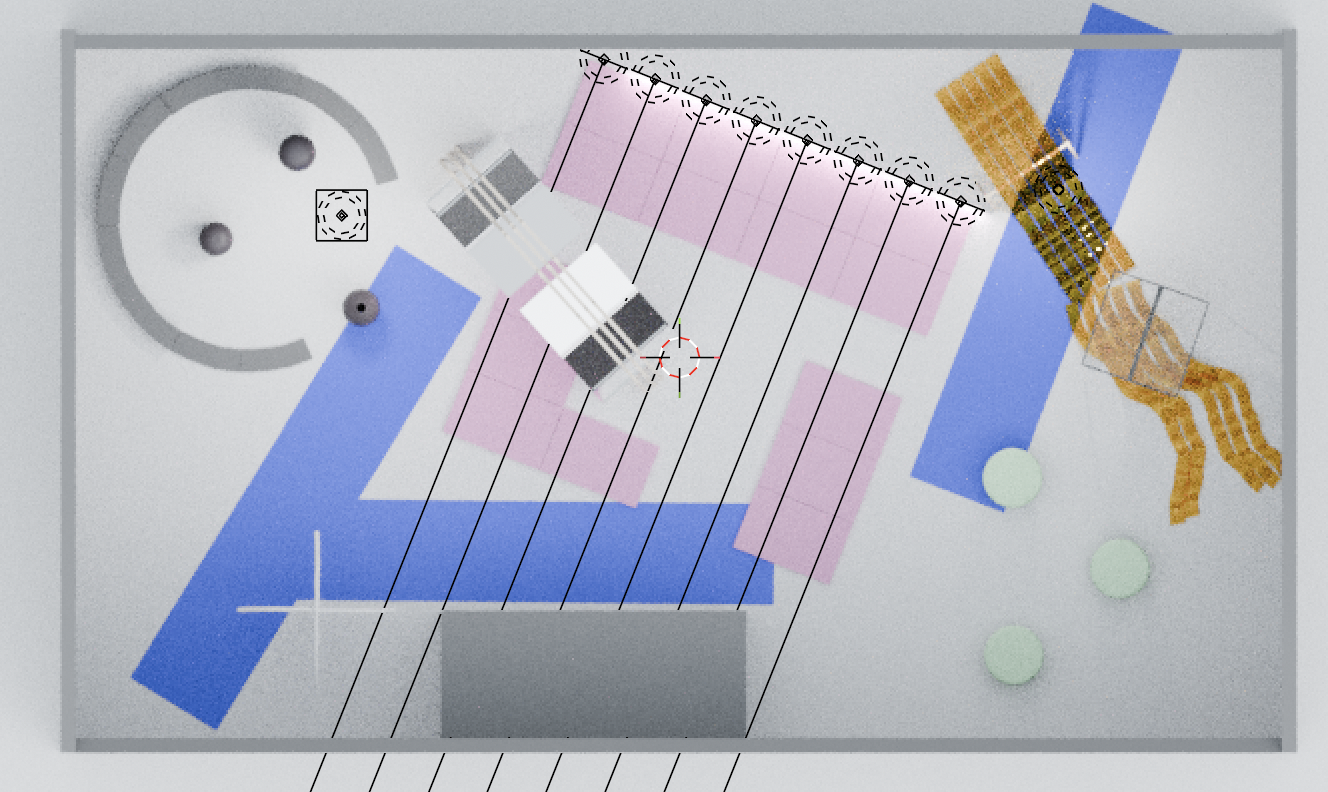
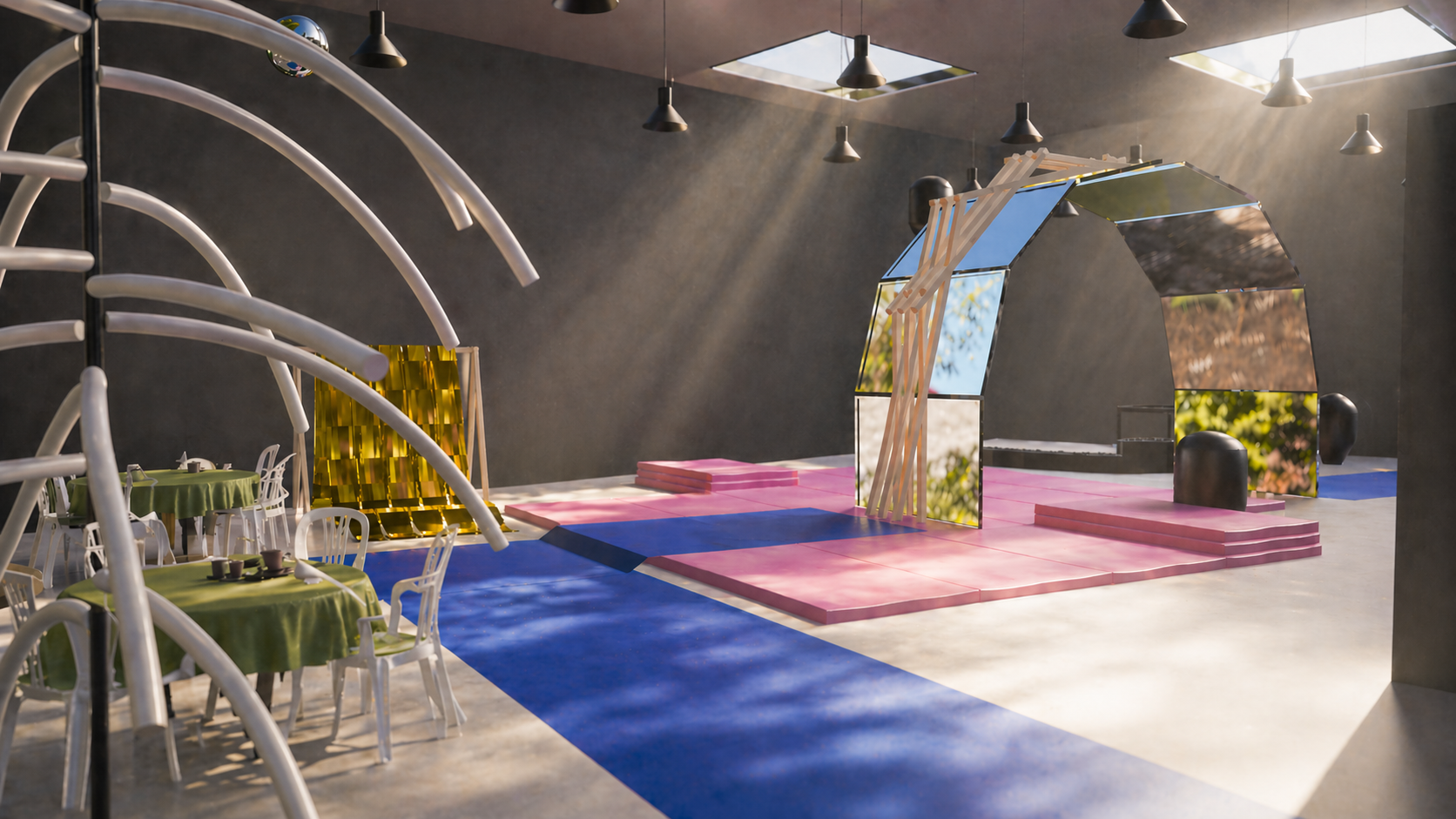
MEGAMETA presents nine stored stages in the main hall of Wiese eG. The newly assembled structures are arranged as a sculptural garden, inviting visitors to walk through, pause, and observe from multiple perspectives. Through overlaps and interlocking sightlines between the individual stages, new viewpoints emerge on both past and contemporary themes.
The stages are reorganized according to the principles of a Chinese garden, with the aim of creating a utopian environment that maximizes a sense of calm and relaxation. A Chinese garden is defined by five essential elements that must always be present:
- Pond
- Bridge
- Pavilion
- Tree
- Stone
Each of the existing stages has been assigned to one of these elements and arranged accordingly within the overall composition.
Stages
The following stages, sourced from the storage of Hamburg-based choreographers Raymond Liew Jin Pin and Jascha Viehstädt, will be reassembled as an immersive, walkable landscape as part of MEGAMETA.
Mermaid (2017)
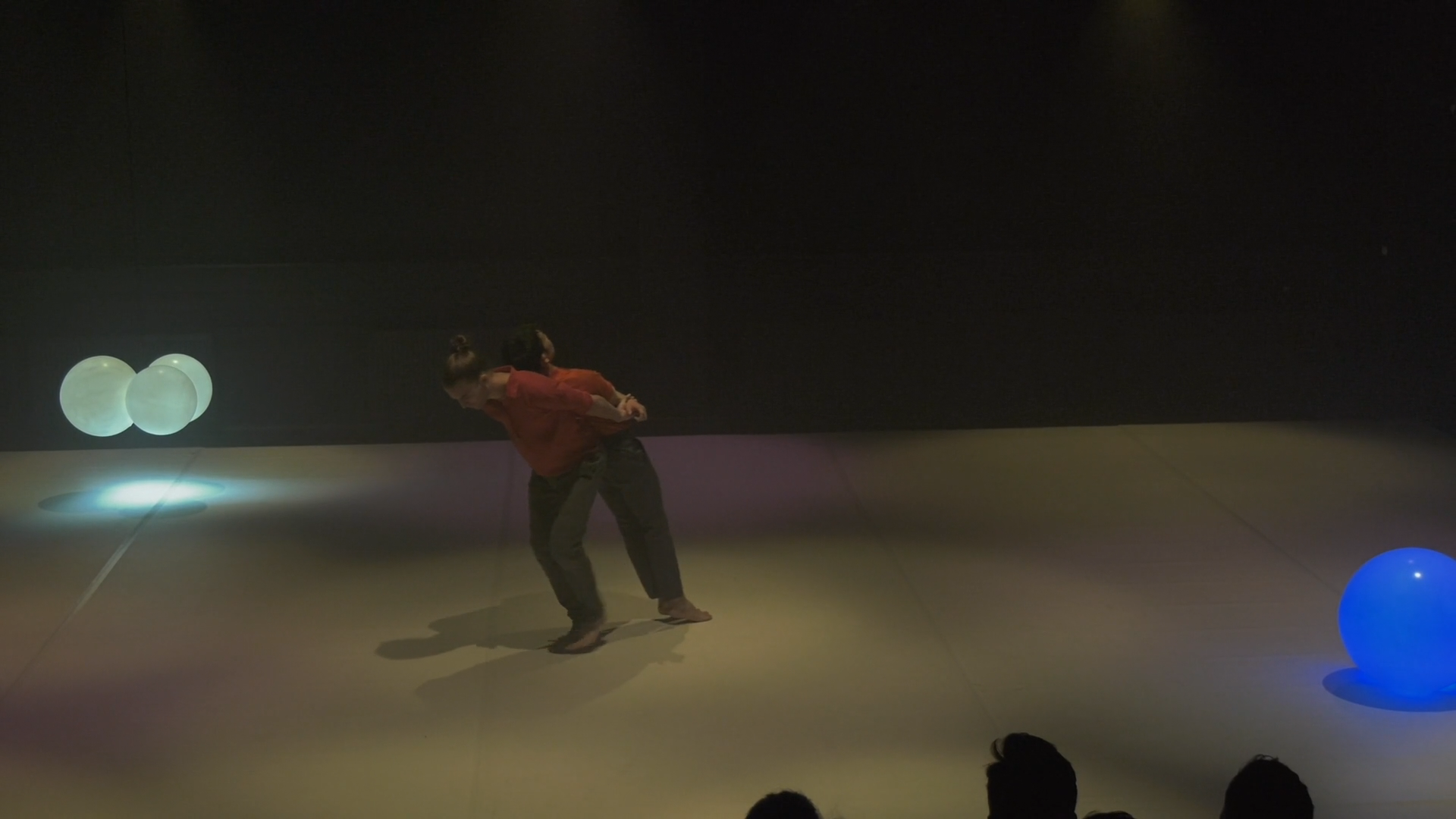
MERMAID is an attempt to create a monster. Two performers unfold in a dancing symbiosis movement potentials of cohesion and fusion of two bodies that function as one. They examine the figure and story of the mermaid in terms of its historical and contemporary significance and explore the question of what makes this hybrid of human and fantasy as attractive as it is inseparable.
In a macro-soundscape by Czechoslovakian field recording artist Slavek Kwi, a dance piece develops that formulates an appeal to the desire for fantasy and in which questions of personal identity, belonging, gender, partnership and the mechanisms of social tolerance find a subtle mirror.
Triangle (2018)
XXX
Tableau (2019)
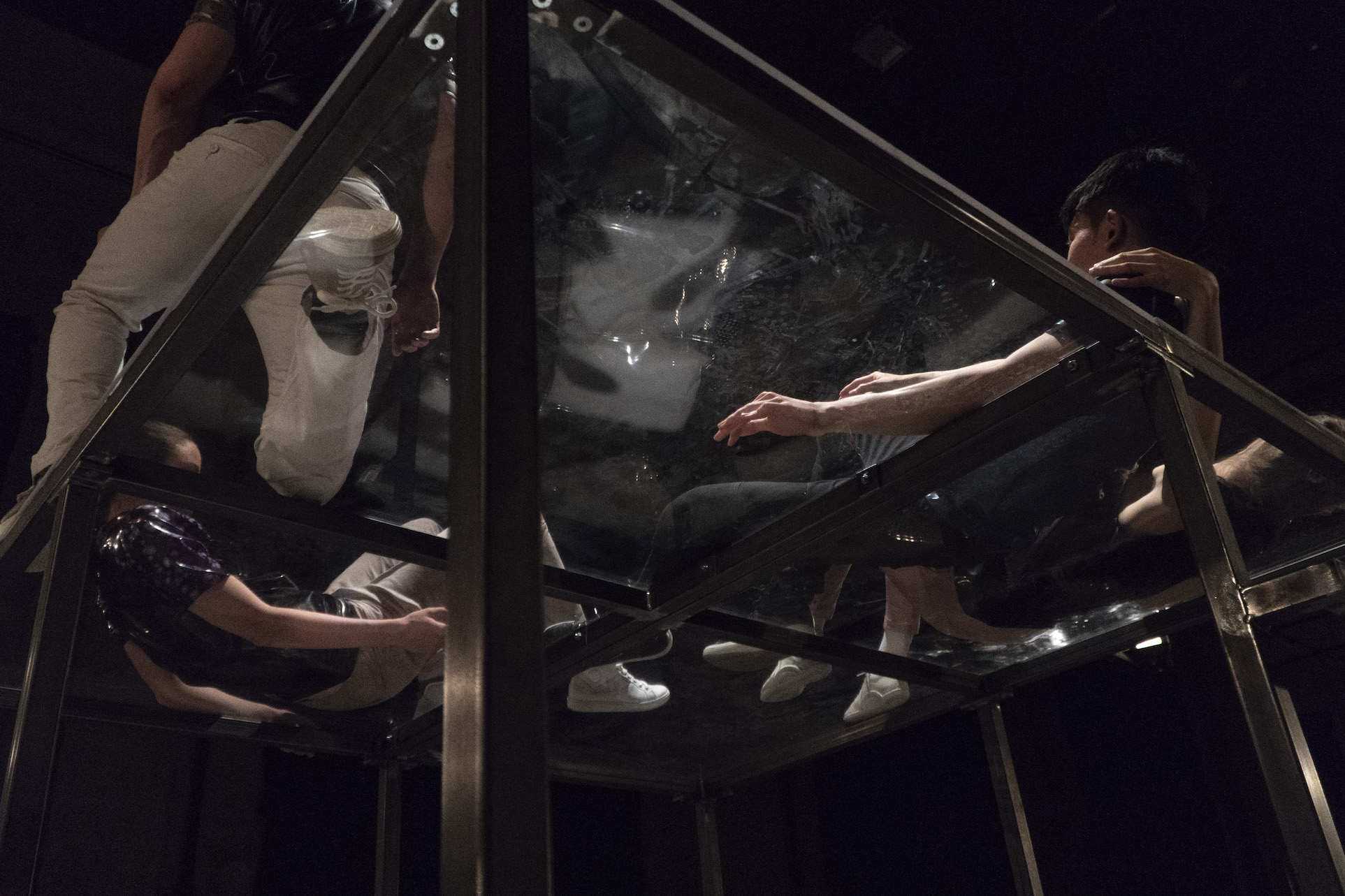
Through a staggered performance of the same solo, four dancers follow the instruction to imitate - a canon - and layer by layer they enter a tight network of interlinking.
In a landscape of superimposed movements, Tableau shows the canon in a physical interpretation. By duplicating and overlapping a solo, it searches for the cohesion between individual movements and for the expansion and distortion of the original material. Together with the experimental multi-instrumentalist Aidan Baker and the scenographer Takaya Kobayashi, a moment arises that uses the old, musical form of the canon as a portrayal of the modern mania of permanent connection. Much like a moving Tableau Vivant, the work invites an immersion in the rhythm of repetitive fragments while simultaneously questioning their exposure.
Kampung Baru (2020)
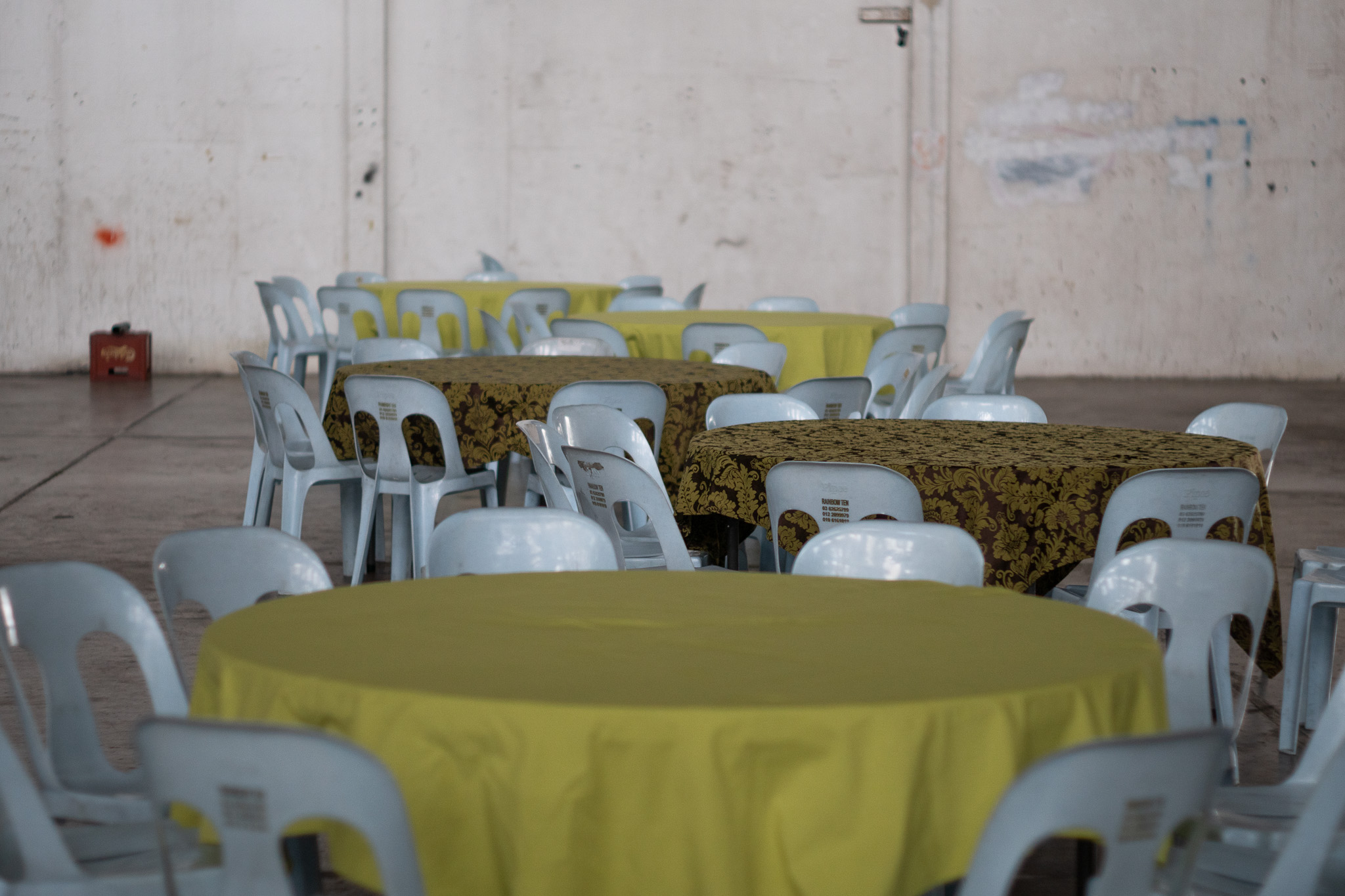
A long day, a quiet nap, a chill night, a celebration, a feast of memories - some already dissipated, and some you can no longer remember. Everything coming together in a jumble of emotions and images. As a new village appears and landscapes slowly move, you observe daily routines that interlace with each other, attracting attention and fading away. In search of a new village and a contemporary zone, Raymond Liew Jin Pin delved into the field of traditional Malay, Chinese and Indian dance movements. He allows himself – and three contemporary dancers – to reinterpret his cultural roots and embody his biography, to merge old and new, east and west, „tradition“ and „modernity“. And at the end, most of it disassembled, the space of the party, the heat, the song, are still there, waiting for you to revisit.
Deep.Dance (2020/21)
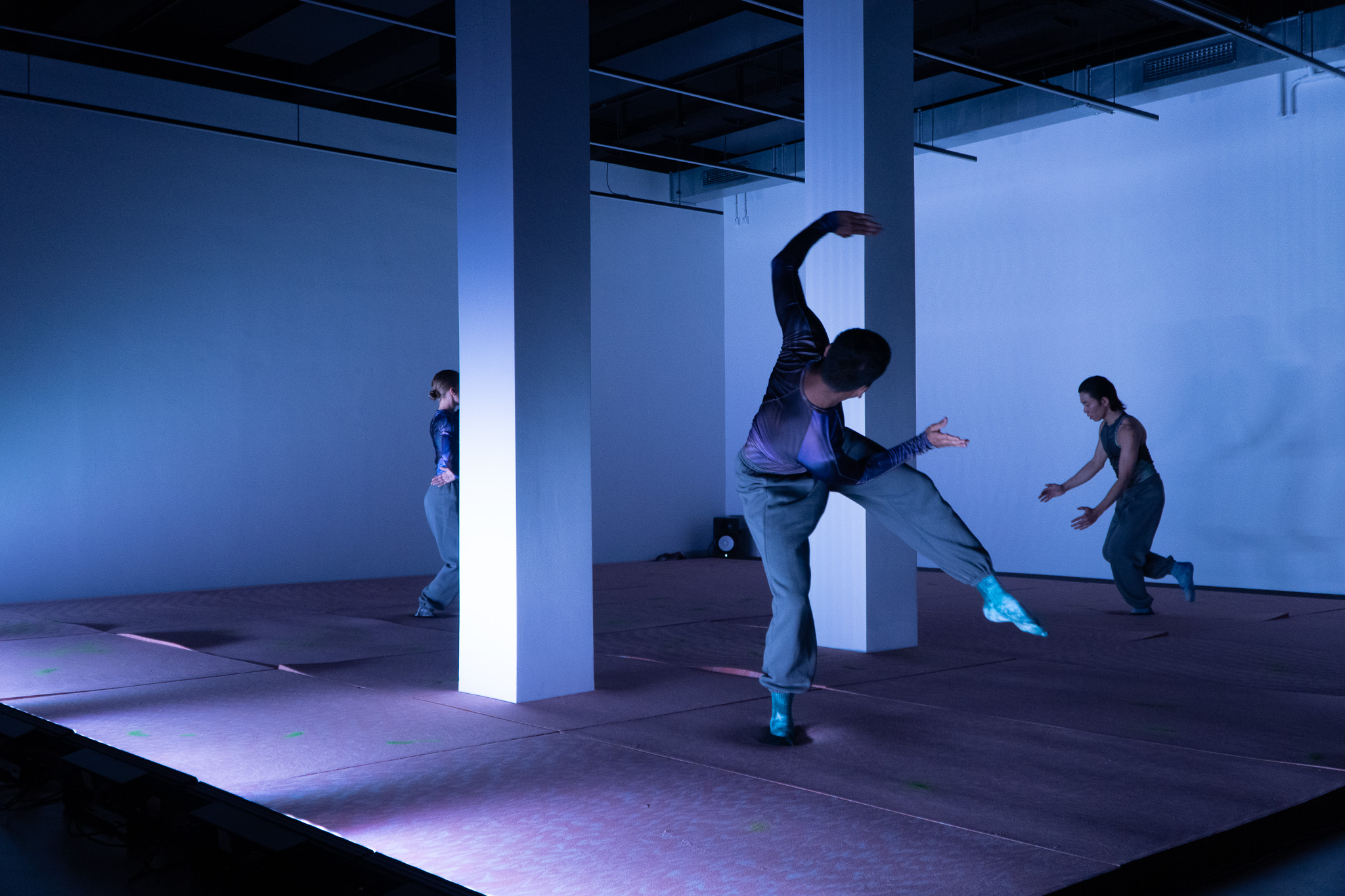
In Deep.Dance, a team of international artists replaces itself with an artificial intelligence. A complete choreography, created by an artificial neural network that they programmed, is executed down to the last detail by three dancers. The strangely familiar movements open up an emphatic view into the hyper-logical world of code and confront the viewers with a construct that is accessible to few people and yet determines our future.
The Hamburg based choreographer Jascha Viehstädt → creates a silent and soft world of statistically predetermined movements that makes tangible what it means to have human creativity computed by a machine. In this way, the uncompromising simplicity of the piece offers an insight into the basic mechanisms of software and machine learning and questions the hopes and fears that are projected into the development of artificial intelligence.
1000 Kisses (2022)
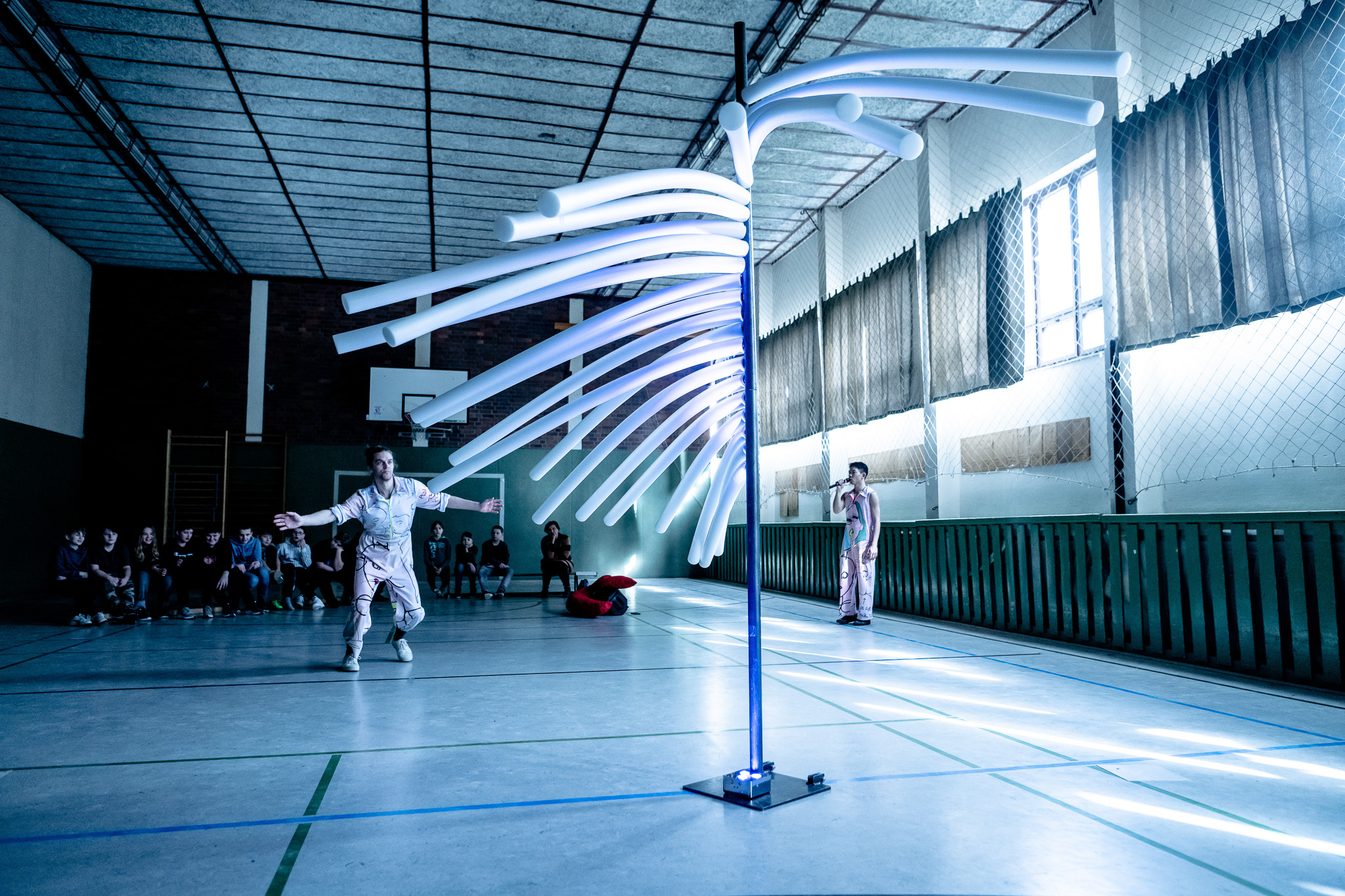
Ever kissed a thousand times? Two dancers don’t mince their words and try it out. Somewhere between fun, frust and – above all – effort, their lips become dry and kissing becomes a completely new thing: conventions, gender and lame prejudices dissolve and draw a rather strange movement portrait of voluptuously touching. From South-East Asian incantations to Western hypersexualisation, everything is there and blurs before the spectators’ eyes into a jungle of images and movement. (@_@)
As an artistic duo from Malaysia and Germany, Raymond Liew Jin Pin and Jascha Viehstädt will investigate the meaning and execution of a kiss across cultural borders and genders. Topics and materials like South-East-Asian rituals, dances and stories, Muslim laws for kissing in Malaysia and European hypersexualisation will all be joined together in a diverse movement-portrait of the kiss.
Maria Cencaru (2023)
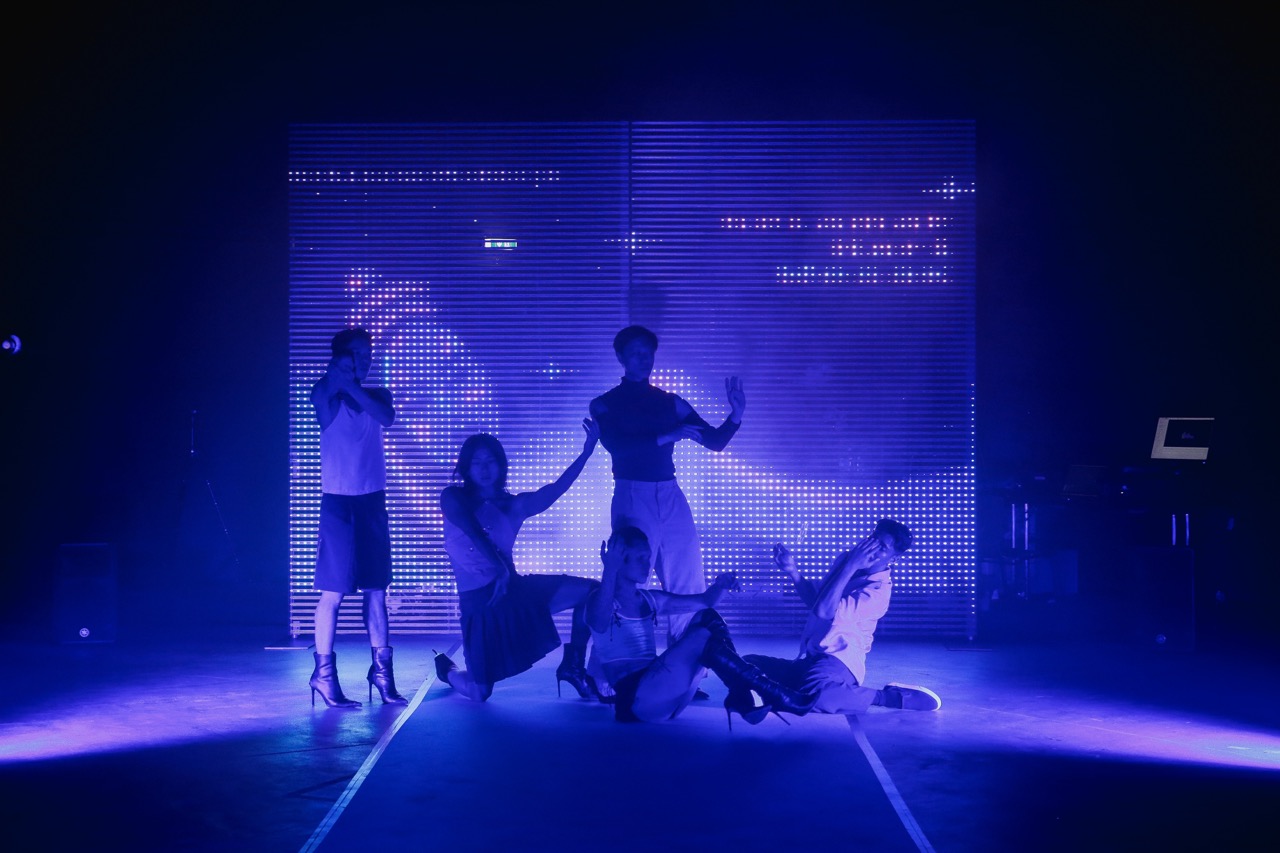
In Malaysia and other Southeast Asian countries, cross-dressing and homosexuality are still illegal or taboo. Nevertheless, when Raymond Liew Jin Pin was eleven years old, his mother dressed him up in a gold sequined dress, put a wig and make-up on him and took him to a talent contest for children. He sang and danced and won 3rd prize.
More than 20 years later and with various trainings in contemporary and traditional Southeast Asian dances, he returns to the moment as a dancer and performer. Maria Cencaru is the queer memory of this, the desire to experience the performance anew and at the same time the drag name of Raymond Liew Jin Pin.
Together with dancers and friends from the queer Southeast Asian diaspora, he searches for shared memories and for what moves them all. They combine their diverse dance backgrounds from traditional and contemporary dances to urban styles such as Voguing and Waacking to share their experiences of oppression and liberation, migration, longing and desire. Maria Cencaru is the commonality of their different identities, a collective movement and the long overdue cis-sis family reunion.
So soft and the sun (2021 - 2026)
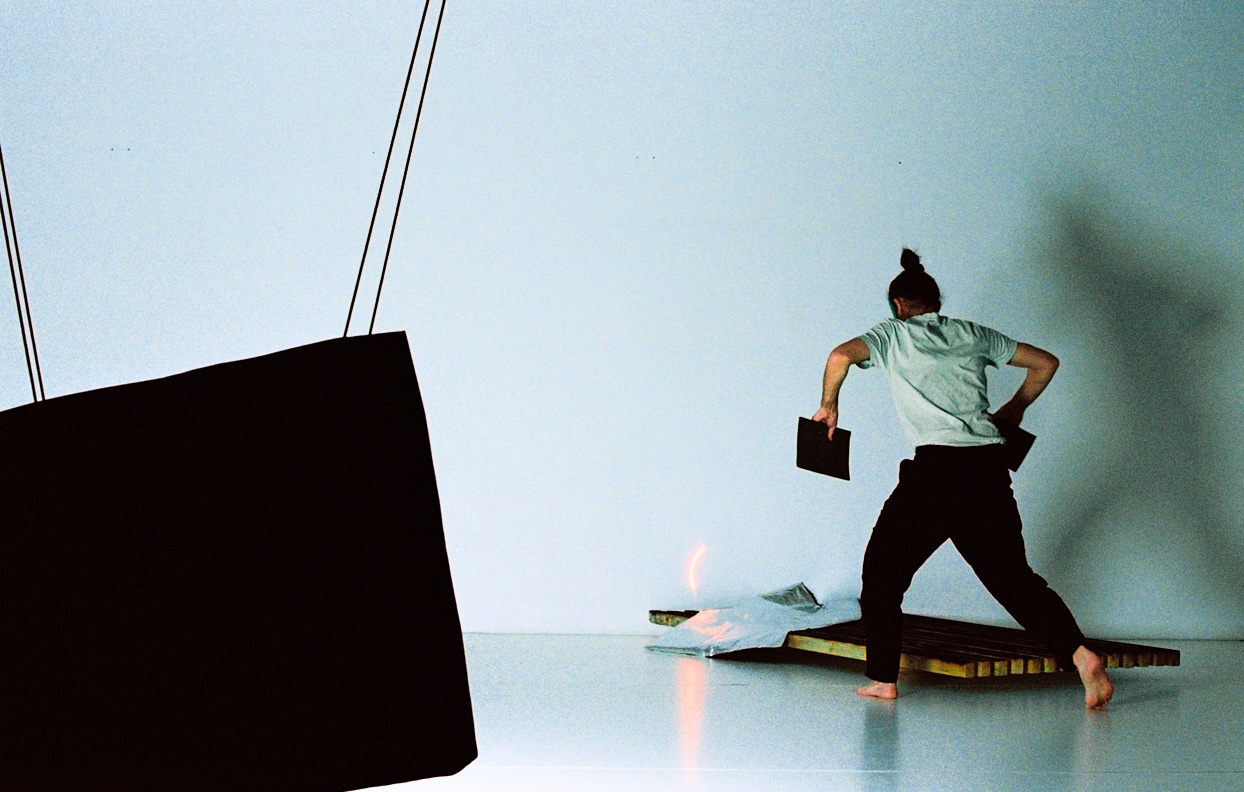
“so soft and the sun” is a hybrid lecture-performance that invites the audience to explore together with artists, authors, and researchers how technology shapes our perception and influences the forces that surround us.
Within an installation composed of simulated day and night rhythms, bright light arrays, light-absorbing ceramic objects, and powerful laser projections by stage designer Takaya Kobayashi, we approach the relationship between humans, code, and nature through various formats. The choreographic exploration by choreographer Jascha Viehstädt is complemented by lectures from Dr. Deniz Sarikaya and Omer Altaher, who contribute perspectives from AI research, epistemology, and the physics of light. Read text fragments by various authors direct attention toward the phenomenon of the sun.
The evening “so soft and the sun” creates an unconventional and open moment in which we collectively ask what software does to us and how it transforms our relationship to the elements and systems that surround us.